
Alts: Volatility Is Not Your Enemy
If returns are uncorrelated and positive.
April 2026. Reading Time: 10 Minutes. Author: Nicolas Rabener.
SUMMARY
- The less correlated an alternative strategy is, the higher its volatility should be
- Enables more efficient capital allocation
- However, only if the returns are positive
INTRODUCTION
Prior to 2000, the hedge fund industry managed less than $500 billion in assets, and most funds reported performance quarterly or annually. Much like private equity, this infrequent reporting had a smoothing effect on returns – the intra-month and intra-quarter swings that inevitably occurred were simply never visible to investors.
Today, with the industry managing close to $5 trillion, monthly reporting has become the norm, and many funds – particularly European UCITS vehicles and ETFs – publish daily returns. Greater transparency is welcome, but it has come at a cost: investors are now fully exposed to the day-to-day rhythm of markets, and high volatility has become something of a negative attribute. Multi-strategy hedge funds like Millennium, which diversify across strategies and run sophisticated risk management systems specifically designed to dampen volatility, have risen to dominate the industry as a result.
But should investors actually treat volatility as a flaw in an alternative investment strategy?
In this article, we argue that it is not the enemy.
VOLATILITY VS CORRELATIONS
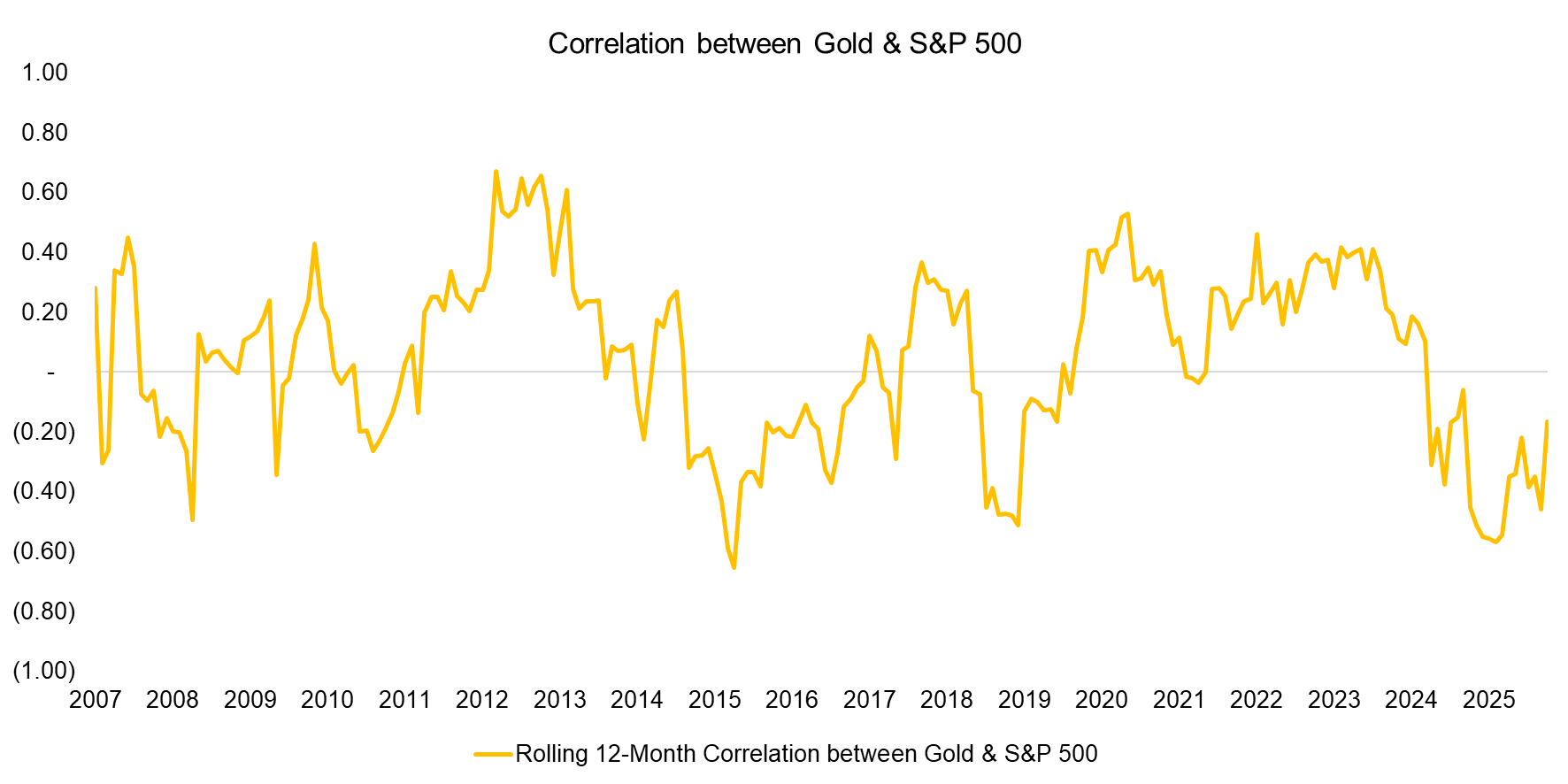
Throughout this article, we will use gold as a proxy for an uncorrelated strategy. Between 2007 and 2026, gold’s average correlation to the S&P 500 was just 0.1 – but that figure masks considerable variation. At its most diversifying, the correlation fell to -0.6 in 2015; at its least, it rose to 0.6 in 2012. The diversification benefit, in other words, was far from constant.
Source: Finominal
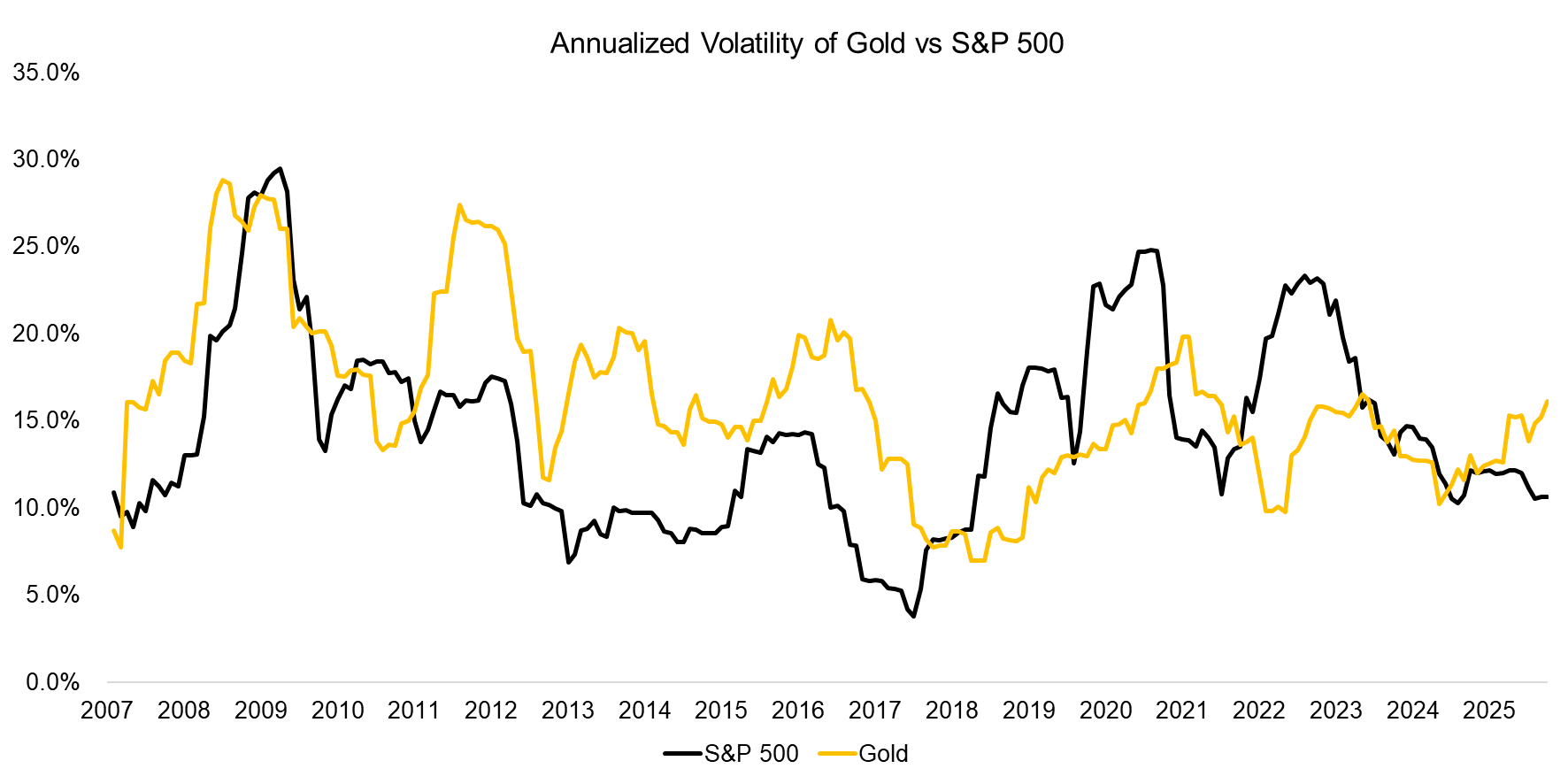
The shifting correlation between gold and equities is mirrored in their volatility profiles. Over the same period, the S&P 500 averaged annualized volatility of 15.4%, modestly below gold’s 17.2% – a reminder that gold is not inherently a low-volatility asset. Both series exhibit substantial dispersion around those averages, with volatility spiking sharply during periods of market stress, most notably during the Global Financial Crisis in 2008.
Source: Finominal
GOLD SCENARIOS
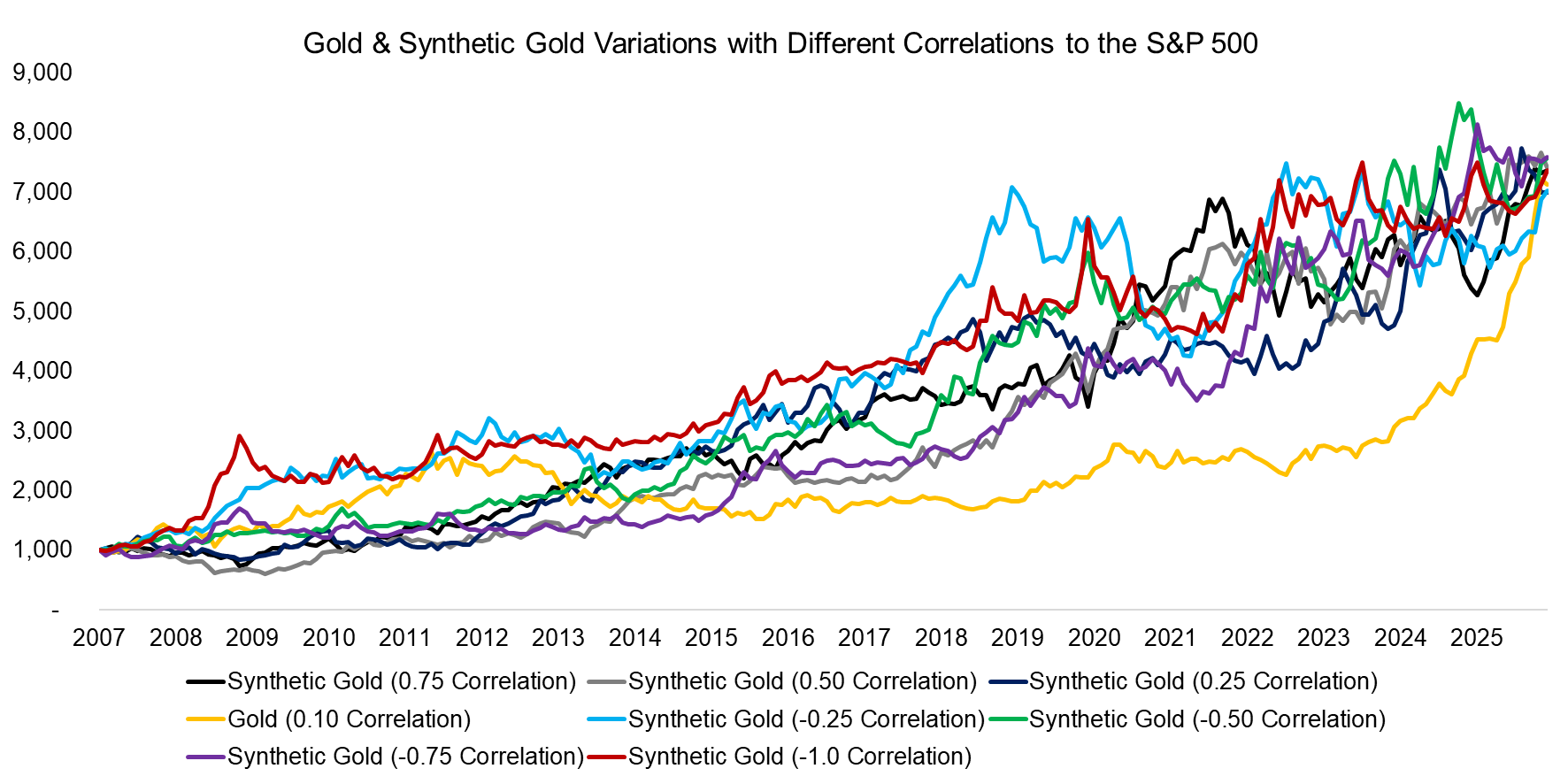
To isolate the effect of correlation, we constructed synthetic variants of gold that preserve the same 17.2% annualized volatility and identical total return over the period, but with correlations to the S&P 500 ranging from +0.75 down to -1.0. Everything else held constant, only the correlation changes.
Source: Finominal
QUANTIFYING DIVERSIFICATION BENEFITS
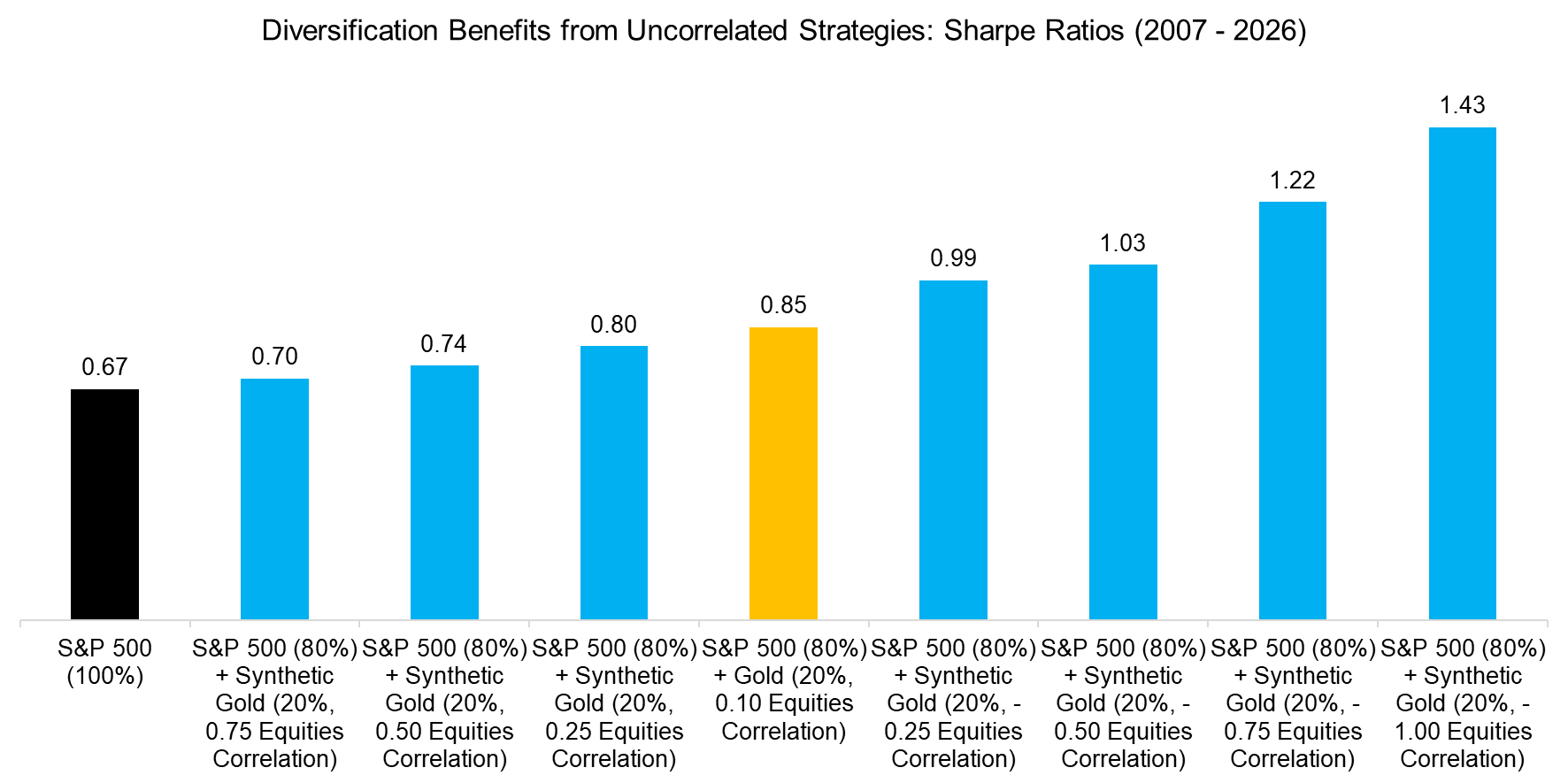
We then simulate adding a 20% allocation to gold – rebalanced annually – to an otherwise pure S&P 500 portfolio. The result: the Sharpe ratio improves from 0.67 to 0.85 over the 2007-2026 period. Running the same exercise across our synthetic gold variants reveals a near-linear relationship between correlation and the Sharpe ratio – the lower the correlation to equities, the greater the diversification benefit and the higher the resulting risk-adjusted return. The direction of the effect is unambiguous and as expected.
Source: Finominal
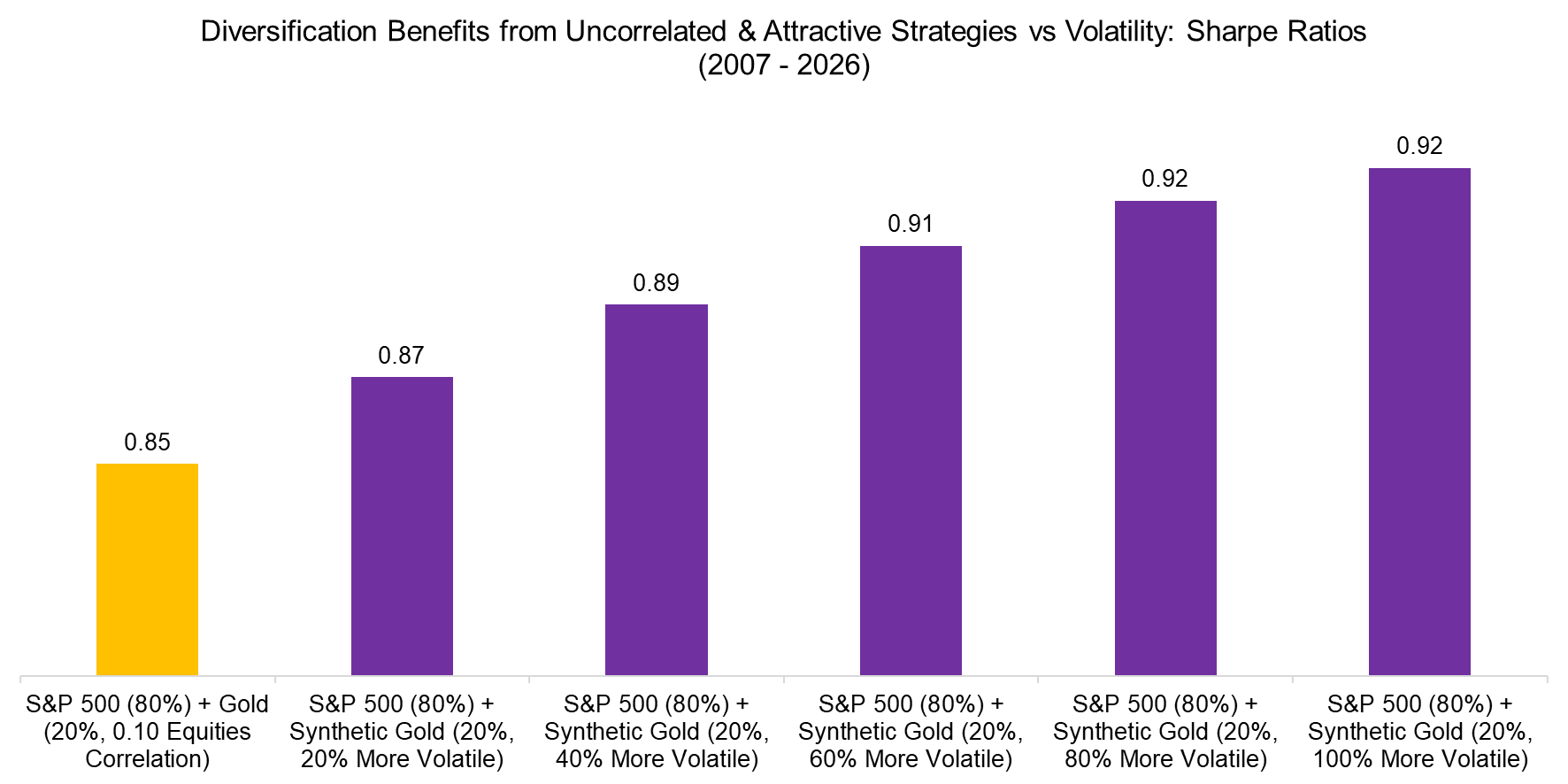
We then stick to the gold scenario with the 0.1 correlation to the S&P 500, and instead vary gold’s volatility, scaling it from its base level of 17.2% up to 34.3% – a doubling of annualized volatility. Rather than harming portfolio efficiency, the higher volatility actually improves it: the Sharpe ratio rises steadily from 0.85 to 0.92 as gold becomes more volatile. When correlation is low, volatility in the uncorrelated asset is not a drag – it is a diversifier.
Source: Finominal
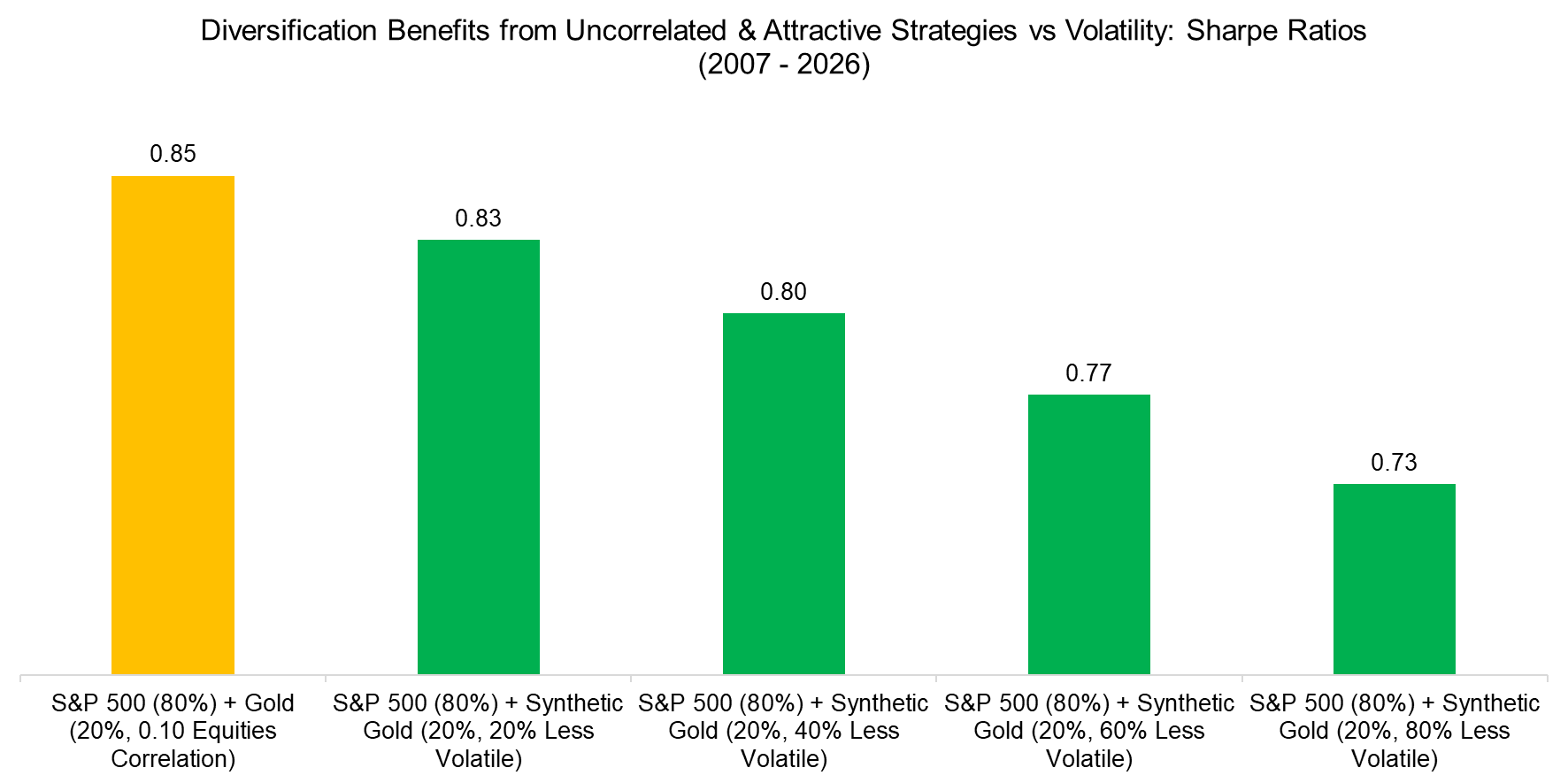
The reverse holds equally true. Compressing gold’s volatility by 80% – from 17.2% to just 3.4% – causes the portfolio’s Sharpe ratio to fall from 0.85 to 0.73. The less volatile the uncorrelated asset, the less work it does.
Source: Finominal
ATTRACTIVE VS UNATTRACTIVE UNCORRELATED RETURNS
Our analysis so far shows that higher volatility is not inherently a negative feature for uncorrelated investments – in fact, it adds value as correlation becomes more negative. But this conclusion rests on a key assumption: that the uncorrelated asset actually delivers a meaningful return. Gold, in our case study, earned a CAGR of 10.9% between 2007 and 2026, modestly ahead of the S&P 500’s 10.4% – a favourable backdrop that few if any alternatives can claim.
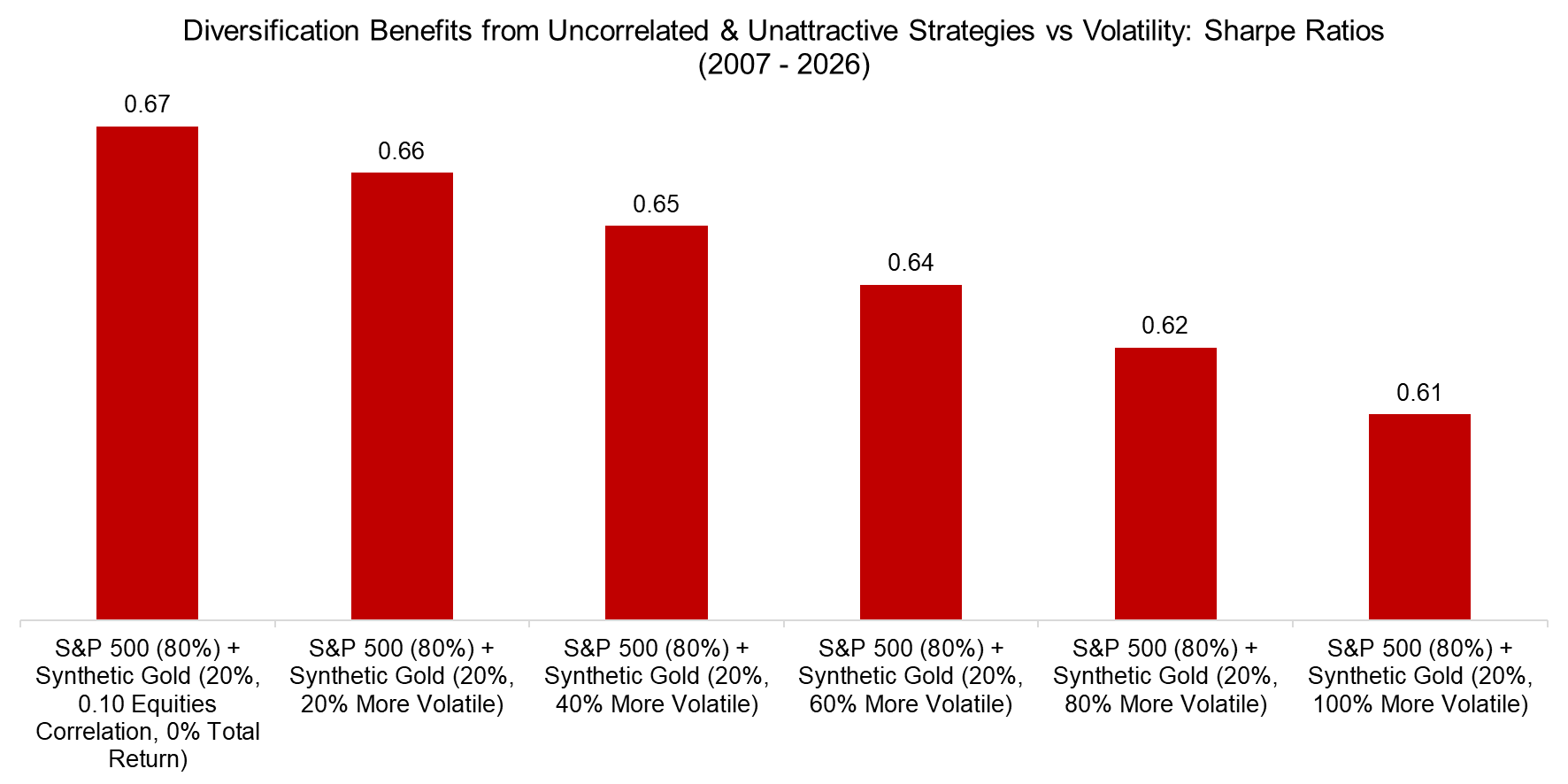
When we replace gold’s return history with a flat 0% total return – keeping the 0.1 correlation intact – the picture changes entirely. Higher volatility now works against the portfolio, and the Sharpe ratio declines steadily as volatility increases. The implication is clear: volatility is only an ally when the underlying strategy is generating positive returns. Without that foundation, it simply amplifies noise.
Source: Finominal
FURTHER THOUGHTS
One practical advantage of high-volatility, uncorrelated strategies is capital efficiency: because their diversification punch is stronger, smaller allocations are needed to move the needle. Multi-strategy hedge funds with suppressed volatility suffer the opposite problem – they demand large allocations to deliver meaningful portfolio-level benefits.
The drawback is behavioural. Investors are rarely indifferent to large drawdowns on their statements, even when those losses are entirely rational in a portfolio context. This tension goes a long way toward explaining the dominance of large multi-strategy funds, which are acutely aware of and exploit the behavioural biases of both allocators and market participants.
RELATED RESEARCH
How to Combine Alternative Strategies
Are Liquid Alts more than Diluted Equity Funds?
Myth Busting: Alts’ Uncorrelated Returns Diversify Portfolios
Are Alternative ETFs Good Diversifiers?
Hedge Fund ETFs
Tail Risk Hedge Funds
Creating Anti-Fragile Portfolios
Combining Risk-Managed Equities and Managed Futures – II
A Horse Race of Low-Beta Equity Strategies
Replicating Popular Investment Strategies with Equities + Cash
Merger Arbitrage: Arbitraged Away?
Market Neutral Funds: Powered by Beta?
60/40 vs Leveraged Diversified Portfolio
ABOUT THE AUTHOR
Nicolas Rabener is the CEO & Founder of Finominal, which empowers professional investors with data, technology, and research insights to improve their investment outcomes. Previously he created Jackdaw Capital, an award-winning quantitative hedge fund. Before that Nicolas worked at GIC and Citigroup in London and New York. Nicolas holds a Master of Finance from HHL Leipzig Graduate School of Management, is a CAIA charter holder, and enjoys endurance sports (Ironman & 100km Ultramarathon).
Connect with me on LinkedIn or X.